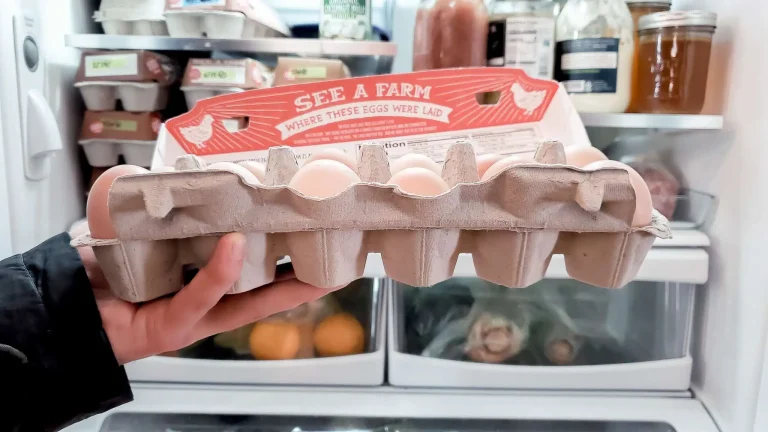
Today we’re going to be talking about colored egg-laying breeds. Most people don’t realize that chickens can lay multicolored eggs because all you see are brown eggs and white eggs in the grocery store.
But you can get chickens that lay blue eggs and green eggs, cream colored and more pinkish tints and all kinds of different colors.
Why Would you Want to Have Multi-Colored Eggs?
Really, it’s just for fun and for beauty. There’s nothing nutritionally different about them. They’re the same on the inside. They still have white egg whites and yellow egg yolks.
Don’t worry, you’re not going to crack it open and find a green egg yolk. That would be kind of gross.
So internally they’re completely the same, but on the outside, it’s so beautiful to have this mixed basket of green and blue and white and brown eggs.
This has recently become much more popular with colored eggs being more ‘Instagram worthy’.
Because of that, among the homesteading world, green and blue egg-laying chicken breeds have been popping up everywhere.
Our Colored Egg Laying Flock at Headrick Homestead
Blue Colored Egg Layers
First of all, we got Ameraucana which are the traditional blue egg-laying chicken. They’ve been producing really well for us. They lay really pretty blue eggs, and they are the core of our colored egg-laying flock.
Green Colored Egg Layers
However, this time we also tried Murray McMurray’s Whiting True Blue and Whiting True Green. This was my first time having experience with this breed, and I have been extremely happy.
We’ve been getting lots of very colorful eggs and the birds have been healthy, so I would recommend trying out that breed.
So that covers our green and blue egg layers. What about our browns?
Dark Brown Colored Egg Layers
Well, I made a video on my favorite brown egg layers to learn more about them. If you’re looking for something that’s a really dark chocolatey brown, that’s when you’re going to want the Cuckoo Marans.
We got ours also from a large hatchery, but hatchery birds are not going to be bred to have that super, super dark, eggshell.
So if you’re really wanting to go for color, I recommend finding a breeder in your area who is selecting for those super, super dark shells. Even though we have a Cuckoo Maran, we have never gotten those really rich, deep, chocolatey eggs.
A little disappointing, but I kind of expected it, so someday I’m going to go to a breeder and get some of those. That pretty much makes up the core of our colorful egg laying flock.
What We Would Do Differently Next Time
Now, one of the things we ended up doing was we got a lot of blue and green egg layers compared to brown egg layers.
Looking back, I think I would have gotten more brown eggs this time around or white eggs because balancing out the color in the carton looks really nice.
We are currently a little green and blue heavy, so don’t be afraid to still get some of those core white and brown egg layers, because if you only have blue, they’re not going to pop the same way as if you have a really nice mix.
Know your Priorities
Do you Just Want a Beautiful Colored Egg Basket?
Finally, you really want to know your goals for when you’re choosing your egg breeds.
If your goal is a pretty egg basket, you might go and seek out that breeder who’s breeding for color.
How Important is Productivity to you?
If you’re going for productivity, you might want to choose more white and brown egg layers that are known for being really good producers. Maybe one of the hybridized breeds like Red Stars or Red Sex Links.
The truth is, productivity can really vary depending on the breed, and that’s why I’m really excited to see some of these new breeds like Whiting True Blues and Whiting True Greens that Murray McMurray is putting out because they’re trying to marry the egg color with a more productive strain.
For me, I really like having productive chickens because I don’t like feeding birds that don’t lay that much.
Do you Care How your Birds Look?
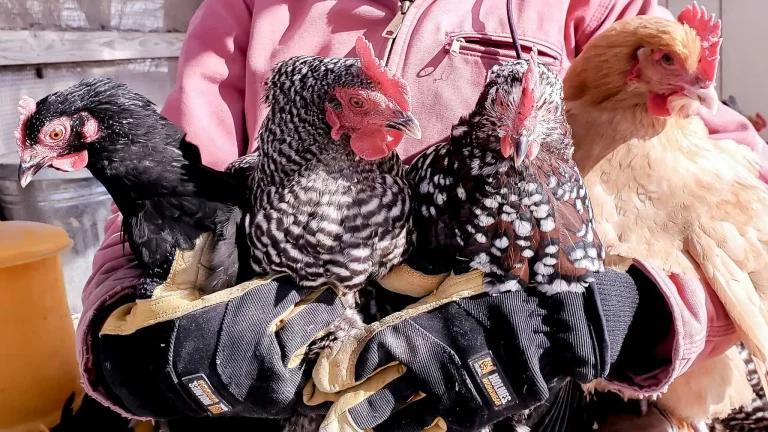
Or maybe your goal is how the bird looks. Chase I love seeing really colorful, exotic looking birds and feathers, so when we were choosing our flock, we wanted to have some beautiful birds as well, so that impacted our decision.
The Four Most Important Things to Consider
In closing, the Four Things that you really want to look at with breeds are first, what color eggs are they laying. What color do you want.
Second, productivity. Often times the cool colored egg breeds have smaller egg sizes or lower productivity.
Third, the actual look of the birds themselves. External beauty does not always correlate with egg color…
And lastly, climate. Do they handle your climate well? In Minnesota that makes a huge difference between your hens being comfortable or some struggling or even not making it through the winter.
Even cases like comb size can impact this. Birds can get frostbite really easily with large combs, so I tend to look for heavier birds and birds with smaller combs.